

Sometimes, the raw materials for your next profitable business are hiding in what you throw away.
That was one of the biggest lessons I took away from a session on “Integrating Sustainable Practices into Business Operations Using the Circular Economy,” organized by GIZ Nigeria & ECOWAS SEDIN.
I was invited to attend the session, and what I witnessed reinforced something I strongly believe: we need to start looking at business opportunities differently.
For many people, waste is simply something to dispose of. Once a product has served its immediate purpose, the leftover materials are considered useless. They are discarded, burnt, dumped or left to accumulate.
But what if some of those materials still have economic value?
What if the waste generated by one business could become the raw material for another?
What if something we routinely throw away could be transformed into a product people are willing to pay for?
That is the thinking behind the circular economy, and seeing it demonstrated through the work of local producers made the possibilities even more exciting.
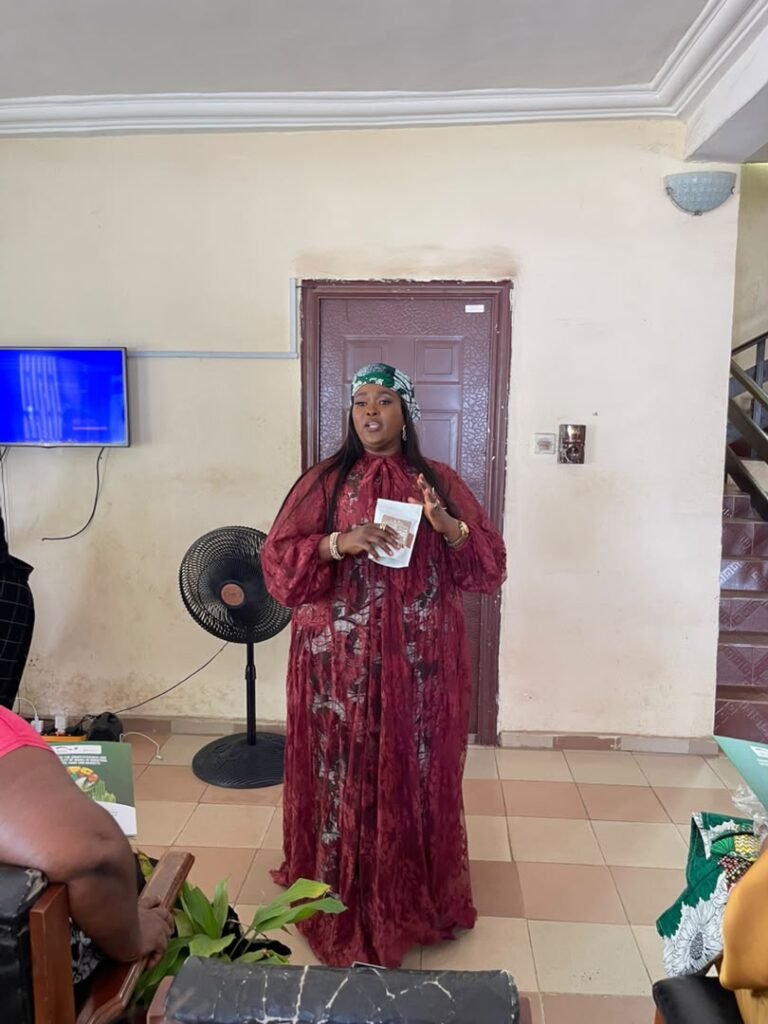
What I Saw: Everyday Waste Becoming Marketable Products
One of the most interesting parts of the session was seeing producers demonstrate how everyday waste and agricultural by-products could be converted into useful products.
These were not merely ideas being discussed in a presentation. I had the opportunity to inspect the products, engage with the producers and learn more about the processes behind their work.
Some of the examples were particularly impressive.
Unripe plantain peels, which many households and food businesses would ordinarily discard, were being dried and used as a base for black soap.
Coconut shells were being transformed into beautifully designed accessories, including earrings, bangles and key holders.
Coconut residue left after extracting milk and oil was being processed into powder, creating another use for a material that might otherwise have been thrown away.
Animal by-products were also being put to productive use in the manufacture of animal feed.
Think about that for a moment.
A material that one person considers waste can become another person’s raw material. With the right knowledge, equipment, processing techniques and creativity, that raw material can become a product with market value.
What impressed me was not only the creativity behind these products, but the business thinking behind them.
The producers were finding ways to generate income from materials that might otherwise have been discarded. They were demonstrating that environmental responsibility and commercial opportunity do not have to compete with each other.
In fact, they can reinforce each other.
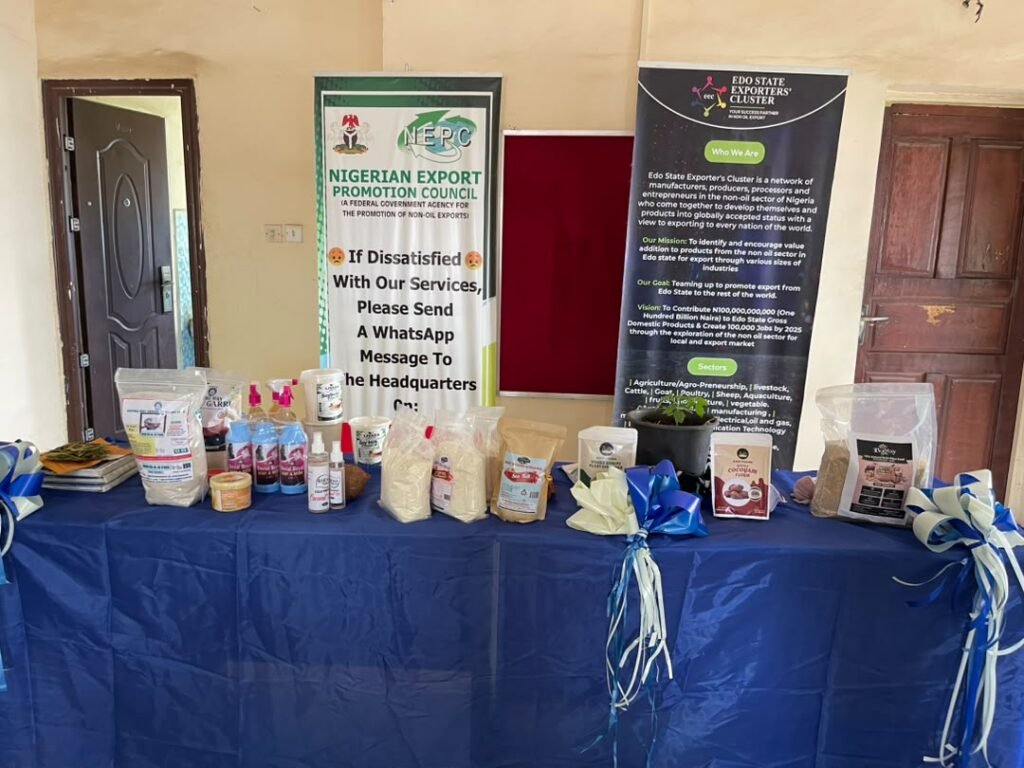
The Circular Economy: Moving Beyond the Take-Make-Dispose Model
To understand why this matters, we need to look at how many businesses traditionally operate.
A conventional linear business model follows a simple pattern:
Take → Make → Use → Dispose.
Raw materials are extracted or purchased, converted into products, sold or consumed, and eventually discarded.
While this model has supported industrial and commercial activity for generations, it also contributes to resource depletion, pollution and growing waste challenges.
The circular economy offers a different approach.
Instead of treating waste as the inevitable end of a product’s life, it encourages businesses to rethink how materials are sourced, used, recovered and reused.
The objective is to keep resources in circulation for as long as possible, reduce unnecessary waste and create additional value from materials that would otherwise be lost.
This can happen in different ways.
A manufacturer can reuse production leftovers. An agricultural business can turn crop residues into useful products. A food processor can explore opportunities for its by-products. A fashion business can re-purpose fabric off cuts. A small business can redesign its packaging to reduce waste.
The possibilities are not limited to large manufacturing companies.
Small businesses, informal producers, artisans, farmers and entrepreneurs can all participate in the circular economy.
And that is where I see an enormous opportunity for Nigerian MSMEs.
Sustainability Does Not Have to Be an Expensive Business Decision
One of the assumptions I would like more entrepreneurs to reconsider is that sustainability is an additional cost that only large organizations can afford.
We sometimes imagine sustainability as something that requires expensive equipment, sophisticated technology, specialized consultants and significant financial resources.
Those investments may be necessary for certain businesses, but sustainable practices can also begin with smaller operational decisions.
For example, a business can examine the materials it currently discards and identify whether any can be reused, repurposed or sold.
A food processing business can investigate whether its agricultural by-products have value in another industry.
A fashion entrepreneur can explore how fabric off cuts can become accessories or smaller products.
A manufacturer can review its production process to identify where raw materials are being wasted.
A retailer can examine packaging, storage and distribution practices to reduce unnecessary material use.
These are business decisions, not just environmental gestures.
When a business uses materials more efficiently, it may reduce procurement costs. When it finds a market for its by-products, it may create an additional revenue stream. When it reduces waste, it may improve operational efficiency.
Of course, every opportunity must be assessed properly. Entrepreneurs need to consider processing costs, product quality, market demand, safety requirements, regulatory standards and the resources required to operate sustainably.
But the important point is this: sustainability can be part of a business model rather than an expense added to it.
The Business Opportunities Hidden in Nigeria’s Waste
Nigeria has significant agricultural, manufacturing, food processing and consumer markets. These activities generate different forms of by-products and waste that deserve closer attention.
We should be asking more questions about how these materials can be used productively.
Consider the agricultural sector.
Plantain peels, cassava peels, rice husks, maize cobs, coconut shells and other agricultural residues are often treated as waste. Yet, depending on their properties and appropriate processing methods, some of these materials can serve as inputs for other products and industries.
In the food industry, by-products from processing can potentially be developed into animal feed ingredients, compost and other useful products, subject to proper safety and quality controls.
In the fashion and creative industries, fabric remnants, leather off cuts and other leftover materials can inspire new product lines.
In manufacturing, leftover materials may be recovered and reused within production processes or supplied to other businesses that can use them.
What does this mean for entrepreneurs?
It means we need to start seeing waste management as a potential business opportunity.
It means that some of our future entrepreneurs may not necessarily build their businesses around producing something entirely new. They may build profitable enterprises by finding better ways to use what already exists.
And it means that innovation does not always require inventing something from scratch.
Sometimes, innovation begins by asking a different question about an existing resource.
The Missing Link: Skills, Innovation and Business Development
However, there is something important we must not overlook.
Identifying waste as a potential resource is only the beginning. Turning it into a commercially viable product requires skills, knowledge and business capacity.
An entrepreneur may discover that coconut shells can be transformed into accessories, but they still need the technical ability to process the material, design attractive products, maintain consistent quality and package the finished items.
Someone interested in producing black soap from plantain peels needs to understand the appropriate processing methods, product formulation, hygiene and quality standards.
A producer exploring agricultural by-products for animal feed needs to understand nutritional requirements, safety and applicable standards.
And beyond production, every entrepreneur must understand pricing, branding, marketing, distribution, customer relationships and financial management.
This is where human capital development becomes essential.
At Genius Hub Limited, our work in skills development, TVET, entrepreneurship, digital inclusion and MSME development is built around the understanding that people need more than ideas to build sustainable businesses.
They need practical capabilities.
They need technical knowledge.
They need business management skills.
They need access to relevant tools and markets.
They need the ability to identify opportunities, test ideas, improve products and build enterprises that can survive.
For me, the circular economy creates an important opportunity to connect environmental sustainability with practical skills development.
We can train people to identify valuable resources in their communities, develop products from appropriate waste materials and build businesses around solutions that address real needs.
Imagine what could happen if more young people and women were equipped with the skills to turn agricultural waste into marketable products, create accessories from recovered materials or develop innovative solutions for local waste management challenges.
We would not only be promoting environmental responsibility.
We would also be creating pathways to income, entrepreneurship and employment.
Why MSMEs Must Be Part of the Circular Economy Conversation
Small and medium-sized businesses are important to Nigeria’s economic development. They create livelihoods, provide goods and services, support local supply chains and offer employment opportunities.
But MSMEs also face operational challenges.
Rising production costs, limited access to finance, inefficient processes, inadequate infrastructure and competition can make it difficult for many of them to remain sustainable.
The circular economy offers another way to think about some of these challenges.
Instead of constantly purchasing new materials, businesses can investigate opportunities to recover and reuse suitable resources.
Instead of treating every production by-product as a disposal problem, they can explore whether another business could use it.
Instead of operating in isolation, businesses can collaborate to create resource-sharing arrangements.
For example, the by-products of one food processing business could potentially become inputs for another enterprise. A furniture manufacturer could explore ways to supply suitable off cuts to artisans. Agricultural producers and processors could collaborate with businesses that specialize in converting residues into useful products.
This creates opportunities for what we might call a local circular business ecosystem.
One business’s challenge could become another business’s opportunity.
However, these connections do not happen automatically. They require information, collaboration, technical expertise, quality assurance and reliable supply chains.
That is why platforms that bring entrepreneurs, producers, development organizations and business support institutions together are important.
ESG Is Becoming a Business Conversation
During my engagement with the producers, I also had the opportunity to discuss their processes, sourcing, sustainability and Environmental, Social and Governance (ESG) considerations.
This is an important part of the conversation.
ESG is increasingly relevant to how businesses assess their environmental responsibilities, relationships with people and approach to governance.
For smaller businesses, it may seem like a subject designed primarily for large corporations. But its underlying principles can be reflected in everyday business decisions.
How responsibly do you source your materials?
How do you manage the waste your business generates?
Are your production processes safe for workers and consumers?
Do you treat employees and suppliers fairly?
Are your business records and operational practices transparent?
Are you considering the environmental consequences of your activities?
These questions matter because sustainability is not just about what a business produces. It is also about how that business operates.
MSMEs do not need to become large corporations before they begin paying attention to these issues.
They can start by understanding their operations, identifying areas for improvement and introducing practices that are appropriate to their size and resources.
Over time, these improvements can strengthen business efficiency, reputation and resilience.
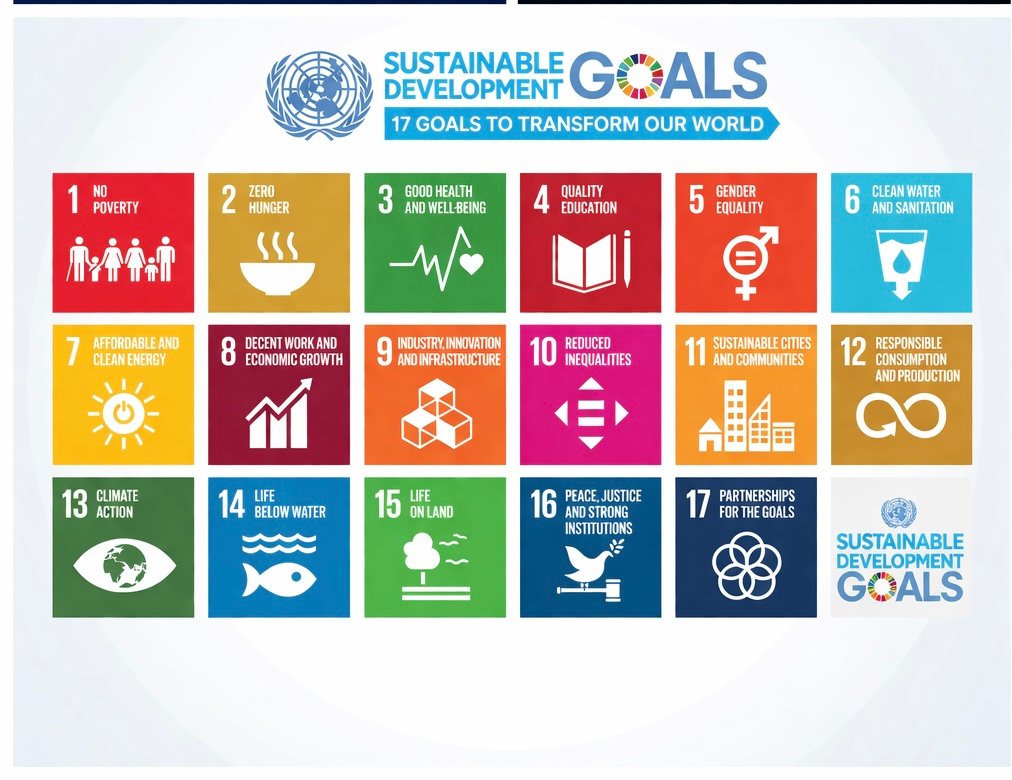
Circular Economy and Sustainable Development
The circular economy also connects directly with the wider Sustainable Development Goals.
SDG 12: Responsible Consumption and Production is particularly relevant because it encourages more efficient resource use, waste reduction and sustainable production practices.
SDG 8: Decent Work and Economic Growth comes into the conversation through the new enterprises, livelihoods and employment opportunities that can emerge from circular business models.
SDG 9: Industry, Innovation and Infrastructure highlights the importance of developing innovative production processes and supporting industries that can use resources more efficiently.
SDG 13: Climate Action is also relevant because reducing waste and improving resource efficiency can contribute to broader efforts to address environmental challenges.
These goals remind us that environmental sustainability and economic development should not be treated as opposing priorities.
We need businesses that can generate income while using resources responsibly. We need entrepreneurs who can identify commercial opportunities while contributing to healthier communities.
And we need to equip more people with the skills to participate in that transition.
From Awareness to Action: What Should Entrepreneurs Do?
My biggest takeaway from the GIZ Nigeria & ECOWAS SEDIN session is that entrepreneurs do not always need to look far to find their next business opportunity.
Sometimes, they need to look more closely at what is already happening within their businesses.
What materials are you throwing away?
Which parts of your production process generate the most waste?
Can some of those materials be reused safely?
Could another business use your by-products?
Are there products you could develop from materials that are currently being discarded?
Could collaboration with another producer reduce costs for both businesses?
These questions can become the starting point for exploring a circular business model.
But entrepreneurs should approach the process thoughtfully. Not every waste material is suitable for reuse, and not every idea will become profitable. Proper research, testing, technical knowledge, product safety and market validation are essential.
The goal is not simply to produce something from waste.
The goal is to create a useful, safe, marketable product or service that solves a problem, meets a genuine need and supports a viable business.
That is how environmental innovation becomes sustainable entrepreneurship.
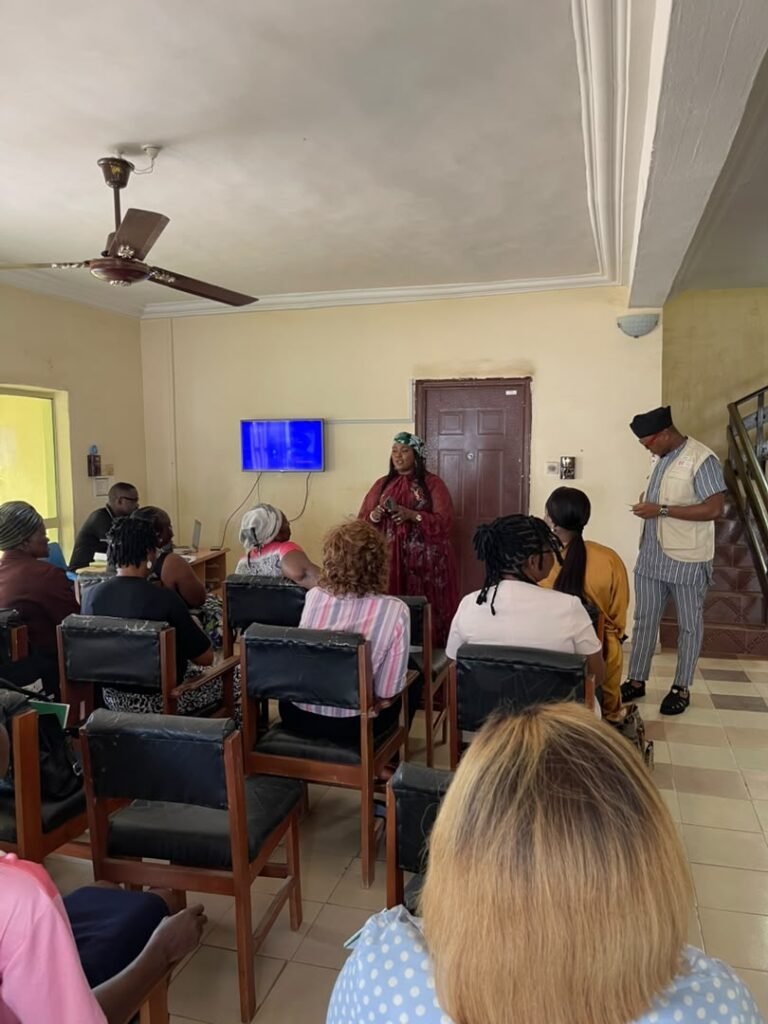
Cleaner Today, Cleaner Tomorrow
I want to appreciate GIZ Nigeria & ECOWAS SEDIN for the invitation and for creating a platform where producers and stakeholders could demonstrate what sustainable business practices look like in action.
I also commend the producers whose creativity and resourcefulness were on display. Their work is a reminder that innovation does not always come from sophisticated laboratories or large manufacturing facilities.
Sometimes, it starts with someone looking at a discarded material and asking, “What else can I do with this?”
That question can lead to a product.
That product can become a business.
That business can create income and employment.
And that business can contribute to reducing waste and making better use of our resources.
The message, “Cleaner Today, Cleaner Tomorrow,” stayed with me because it captures the responsibility we all share.
As business owners, entrepreneurs, consumers and development stakeholders, we have to rethink our relationship with the resources around us.
At Genius Hub Limited, we remain committed to supporting skills development, innovation, entrepreneurship and MSME growth because we believe these are essential pathways to sustainable development.
The circular economy offers another opportunity to put that belief into practice.
And perhaps the next successful business idea is not hidden in an expensive piece of equipment or an entirely new invention.
Perhaps it is sitting in the materials we have been throwing away.
So, the next time you see waste, don’t only ask how to dispose of it. Ask whether there is a responsible way to transform it into value.
Because sometimes, what we call waste is simply an opportunity we have not learned how to recognize.
Cleaner Today, Cleaner Tomorrow.
-Isimeme Whyte
