

Digital transformation without reliable data is just expensive guesswork.
It is a statement I keep returning to because, as conversations around digital transformation become louder and more ambitious, one fundamental question cannot be ignored:
What information are we using to make these decisions?
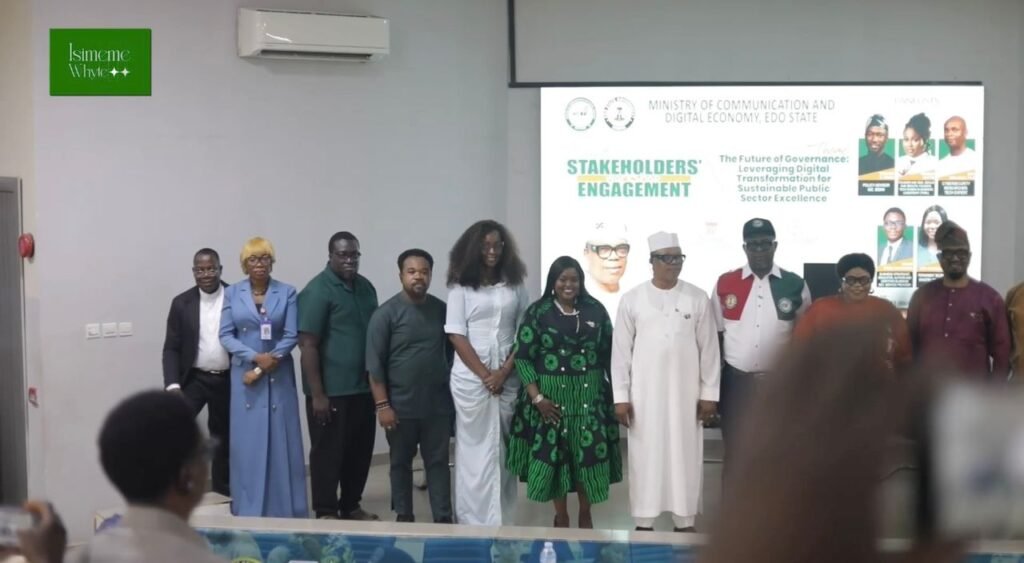
I had the privilege of joining other stakeholders at a meeting convened by the Ministry of Communication and Digital Economy, focused on how Nigeria can harness the digital economy to drive innovation, improve productivity, and promote more inclusive governance.
The conversation covered important areas, including digital transformation, e-commerce, innovation, productivity, and the role of technology in creating more efficient systems.
But one issue stood out strongly for me.
Data collection.
Because before we can talk about transforming systems, we need to understand the systems we are trying to transform.
Before we design interventions, we need to understand the people those interventions are supposed to serve.
Before we invest resources, we need reliable information to tell us where those resources are most needed.
And before we measure progress, we need accurate baseline data against which progress can actually be measured.
Without that foundation, even the most sophisticated digital transformation strategy can become little more than an expensive experiment.
Data Is the Foundation of Good Decisions
We often hear the phrase “data-driven decision-making.”
But what does it really mean?
At its simplest, it means using accurate information to understand a problem, identify patterns, make informed choices, allocate resources, and evaluate whether those choices are producing the desired results.
For government, this is critical.
A government needs to know how many people it is serving, where they live, what challenges they face, what services they require, and whether existing interventions are actually reaching them.
For businesses, data helps organizations understand customers, identify market opportunities, improve products, manage operations, and make better strategic decisions.
For development organizations, reliable data helps identify vulnerable populations, design appropriate interventions, track outcomes, and understand whether programmes are genuinely improving people’s lives.
For a country, data provides the evidence needed to plan effectively.
That is why I believe data collection should not be treated as a technical afterthought.
It is infrastructure.
It is a development tool.
It is a governance tool.
And increasingly, it is an economic asset.

Every Policy Is Only as Good as the Information Behind It
Think about what happens when the data is wrong.
If we underestimate the number of people who need a service, we may underfund the intervention.
If we overestimate demand, resources may be directed where they are not needed most.
If we do not understand the needs of young people, we may design youth programmes that sound good on paper but fail to address the realities young people actually face.
If we do not have reliable information about businesses, we may struggle to understand where support is required.
If we do not know which communities have adequate digital infrastructure, we cannot effectively plan digital inclusion programmes.
The problem is not necessarily a lack of good intentions.
Sometimes, the problem is that we are making decisions without enough reliable information.
And when the foundation is weak, everything built on top of it becomes vulnerable.
Get the data wrong, and everything built on top of it becomes guesswork dressed up as strategy.
Digital Transformation Must Solve Real Problems
Another important point from the conversation was the need to move beyond the idea that digital transformation simply means acquiring sophisticated technology.
Technology is a tool.
The real question is what we use that tool to achieve.
A government can deploy a new digital platform, but if citizens cannot access it easily, have limited digital literacy, or do not understand how to use it, the technology has not achieved its full purpose.
A business can build an online store, but if customers cannot navigate it easily or trust the payment process, the technology does not automatically create value.
An organization can digitize a manual process, but if the new system makes the process more complicated for users, we have not necessarily achieved transformation.
True digital transformation should make things better.
It should make work more efficient.
It should reduce unnecessary barriers.
It should improve access.
It should create new opportunities.
And most importantly, it should solve real problems for real people.
The Small Business Owner Is Part of the Digital Economy
Sometimes conversations about the digital economy become too focused on large technology companies, startups, artificial intelligence, and sophisticated digital infrastructure.
Those things matter.
But the digital economy is much bigger.
It includes the small business owner who uses social media to reach customers.
It includes the fashion entrepreneur who receives orders online.
It includes the caterer who markets services digitally.
It includes the freelancer working with clients in another city or another country.
It includes the farmer using digital platforms to access information and markets.
It includes the entrepreneur who sells products beyond their immediate community because technology has removed some of the geographical limitations that once restricted their business.
That is where digital transformation becomes tangible.
A small business owner who can reach more customers has experienced digital transformation.
An entrepreneur who can accept digital payments and manage orders remotely has experienced digital transformation.
A citizen who can access a government service online without spending an entire day travelling and waiting in a physical queue has experienced digital transformation.
These may not always make headlines.
But they are the changes that determine whether technology actually improves people’s lives.
E-Commerce Can Expand the Marketplace
E-commerce was another important part of the conversation.
And I believe it deserves serious attention as we think about the future of Nigerian businesses.
For many entrepreneurs, geography has traditionally limited the size of their market.
A business located in one community primarily serves customers within that area.
Digital platforms can change that.
With the right tools, knowledge, infrastructure, payment systems, logistics, and customer trust, a small business can potentially reach customers far beyond its physical location.
That creates opportunities for growth.
It creates opportunities for entrepreneurs to test new markets.
It creates opportunities for local products to gain wider visibility.
And it can create new employment opportunities around production, marketing, logistics, technology, customer service, and other areas.
But again, access to technology alone is not enough.
Entrepreneurs need the skills to use it.
They need digital literacy.
They need e-commerce knowledge.
They need to understand online customer behaviour.
They need digital marketing capabilities.
They need to understand cybersecurity and online trust.
They need access to reliable digital infrastructure.
This is why digital transformation and human capital development must move together.
Technology without people who know how to use it effectively cannot deliver its full potential.
Digital Inclusion Must Be at the Centre
If we are serious about building an inclusive digital economy, we must also ask:
Who is being included?
And who is being left behind?
Digital transformation can create enormous opportunities, but those opportunities are not automatically distributed equally.
People in underserved communities may have limited access to reliable internet.
Some may not have the devices required to participate.
Others may lack the digital skills needed to navigate online platforms.
Some entrepreneurs may not know how to take their businesses online.
Others may be excluded because digital services were designed without considering their realities.
This means inclusion has to be intentional.
We cannot simply build digital systems and assume everyone will benefit equally.
We have to design with people in mind.
That means considering accessibility, affordability, digital literacy, infrastructure, language, trust, and the different realities of the communities we are trying to serve.
Young People Must Be in the Room
There is another issue I will continue to advocate for strongly:
Young people must be in the room.
Not simply as participants in programmes.
Not only as beneficiaries of policies.
But as contributors to the conversations that shape the future.
Young people are already building the digital economy.
They are creating businesses.
They are developing technology.
They are working remotely.
They are creating digital content.
They are building online communities.
They are experimenting with artificial intelligence.
They are influencing culture.
They are finding new ways to solve problems.
They understand parts of the digital economy from a lived perspective that policymakers and institutions may not always see.
That experience is valuable.
If we leave young people out of these conversations, we risk designing the future without the people who will live and work in it.
Youth participation should therefore go beyond consultation.
Young people should have meaningful opportunities to contribute ideas, challenge assumptions, participate in policy conversations, and help shape solutions.
From Digital Consumers to Digital Creators
There is a significant difference between using technology and creating value with technology.
We want more young Nigerians to move from simply consuming digital products to creating them.
From scrolling to building.
From using platforms to creating businesses around them.
From searching for opportunities to developing solutions.
From being passive participants in the digital economy to becoming active contributors.
This is why skills development remains so important.
Digital transformation requires infrastructure, but it also requires people.
People who can build.
People who can manage.
People who can innovate.
People who can create.
People who can analyse data.
People who can protect digital systems.
People who can develop businesses around emerging technologies.
The more people we equip, the stronger the ecosystem becomes.
Partnerships Make Transformation Possible
No single institution can build Nigeria’s digital economy alone.
Government has a critical role to play in policy, infrastructure, regulation, public services, and enabling environments.
The private sector brings innovation, investment, products, services, and market knowledge.
Educational institutions develop talent and generate research.
Development partners bring technical expertise, resources, and international experience.
Civil society organizations help ensure that vulnerable and underserved communities are not excluded.
Young people bring creativity, energy, and lived experience.
When these different strengths come together, transformation becomes much more achievable.
This is why the conversation connects strongly with SDG 16: Peace, Justice and Strong Institutions and SDG 17: Partnerships for the Goals.
Strong institutions require good information.
Inclusive governance requires systems that respond to people’s realities.
And sustainable progress requires partnerships that bring different stakeholders together around shared goals.
What We Need Now Is More Action
The conversations are important.
The policies are important.
The strategies are important.
But implementation is where transformation becomes visible.
We need better systems for collecting and managing data.
We need stronger digital infrastructure.
We need more accessible digital skills programmes.
We need businesses to embrace e-commerce.
We need public services that are designed around citizens.
We need young people actively participating in digital policy and innovation.
We need partnerships that move beyond meetings into measurable projects.
And we need to continuously ask whether the technology we are deploying is actually improving people’s lives.
Because digital transformation should never be about technology for technology’s sake.
It should be about outcomes.
Can people access services more easily?
Can businesses reach more customers?
Can entrepreneurs reduce costs?
Can young people access better opportunities?
Can government make better decisions?
Can citizens participate more effectively?
Can communities become more economically productive?
Those are the questions that matter.
Building a Digital Economy That Works for Everyone
I left the meeting grateful for the opportunity to contribute to a conversation that is so important to Nigeria’s future.
But I also left with an even stronger conviction that our digital transformation journey must be grounded in evidence, inclusion, collaboration, and action.
We must collect better data.
We must use that data responsibly.
We must build smarter systems.
We must ensure digital opportunities are accessible.
We must create room for young people to contribute.
And we must keep connecting technology to real economic and social outcomes.
Because the goal is not simply to become more digital.
The goal is to become more productive, more inclusive, more responsive, and better equipped to create opportunities for our people.
That is what meaningful digital transformation should look like.
Better data.
Smarter systems.
Inclusive innovation.
More action.
That is how we build a digital economy that works for everyone.
-Isimeme Whyte
