

Some rooms teach you how to start. Some rooms teach you how to sell. Some teach you how to grow.
But some rooms teach you how to last.
On September 25th at Eko Hotel & Suites, Lagos, I found myself in one of those rooms.
I stood among people who have built businesses that have outlived trends, economic shifts, changing markets and, in some cases, even the tenure of their founders. I also sat alongside founders who are still building, still learning and still thinking about what it will take to turn what they have started into something that can endure.
It was a room filled with experience.
But more importantly, it was a room filled with lessons about what happens after success.
We often celebrate the beginning of entrepreneurship.
We celebrate the person who leaves a job to start a business.
We celebrate the first million.
The first major client.
The first office.
The first employee.
The expansion.
The recognition.
But there is another question we do not ask often enough:
What happens when the founder is no longer there?
That is where the conversation about legacy begins.
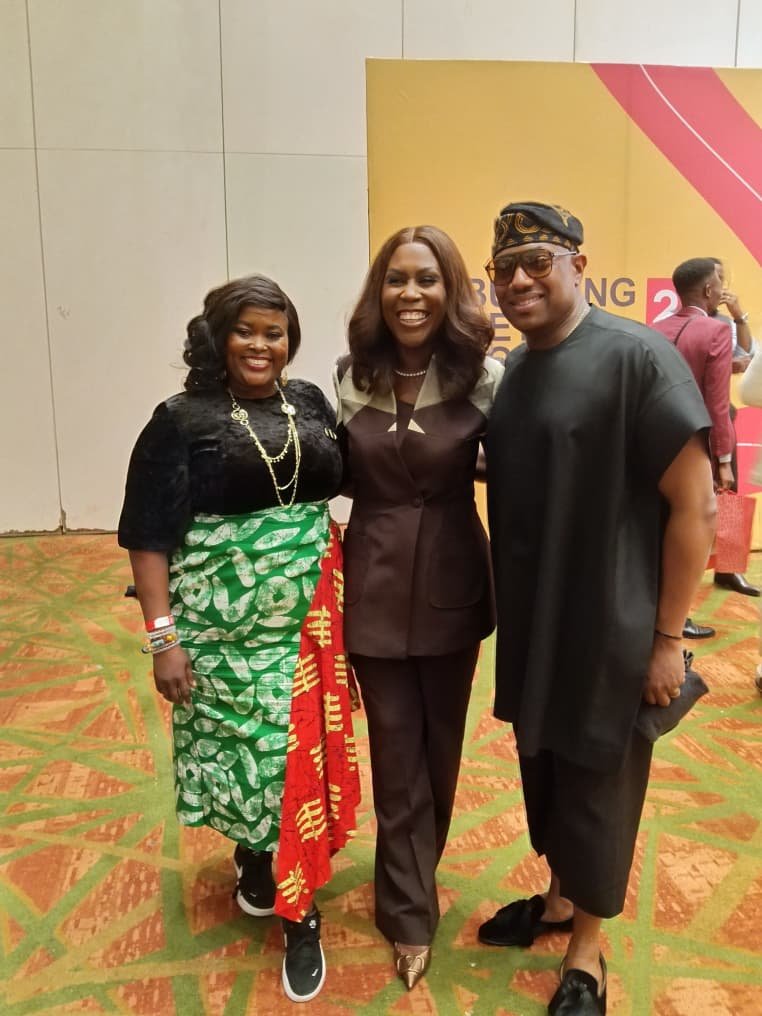
Building a business that does not depend entirely on you
One of my biggest takeaways from the gathering was simple:
A business that runs entirely on one personality rarely lasts.
At the beginning of a business, the founder often is the business.
The founder knows the clients.
The founder makes the decisions.
The founder approves payments.
The founder knows how everything works.
The founder solves problems.
The founder carries the vision in their head.
And sometimes, that is exactly what is necessary in the early stages.
But what helps you start a business can eventually become what prevents the business from growing.
If every decision has to pass through the founder, you do not have a scalable business.
You have a business that has become dependent on a person.
There is a difference.
A founder should be able to step away from the business without everything collapsing.
That does not mean the founder is no longer important.
It means the founder has done the difficult work of turning personal knowledge into organizational knowledge.
They have built systems.
They have documented processes.
They have developed people.
They have established governance.
They have created accountability.
They have made the organization bigger than themselves.
That is what sustainable growth looks like.
Growth without structure is fragile
In my work with MSMEs and young people through Genius Hub, I see this repeatedly.
There are incredibly talented entrepreneurs everywhere.
People with brilliant ideas.
People who can sell.
People who can create.
People who can identify opportunities.
People who have built businesses from almost nothing.
But talent alone does not create an institution.
You can have a great product and still have poor systems.
You can have customers and still have weak financial controls.
You can have a growing team and still have no structure.
You can be making money and still have a business that is fundamentally fragile.
This is why I often believe that the next level of entrepreneurship education has to go beyond simply teaching people how to start.
We must teach people how to build.
How to structure.
How to delegate.
How to document.
How to govern.
How to manage people.
How to manage money.
How to create accountability.
How to prepare for uncertainty.
And eventually, how to hand over.
Because there is a point where entrepreneurship must evolve from “How do I build this?” to “How do I make this sustainable?”
Succession is not something you think about when you are leaving
Another powerful lesson from the gathering was around succession.
We often treat succession as an event.
Someone is retiring.
Someone is stepping down.
Someone is getting old.
Someone is no longer available.
And suddenly, everyone begins asking:
“Who will take over?”
But by then, it may already be too late.
Succession is not an emergency plan.
Succession is strategy.
If you want your organization to outlive you, you have to think about the next generation while you are still actively building.
Who are you developing?
Who understands the vision?
Who understands the values?
Who has the competence to make decisions?
Who can lead people?
Who can adapt when the market changes?
Who can protect what you built without becoming trapped by the way you built it?
These are not questions to ask at the end.
They are questions to ask along the journey.
A successor does not appear magically when the founder leaves.
A successor is developed.
Mentored.
Tested.
Trusted.
Given responsibility.
Allowed to make mistakes.
Prepared to lead.
That is why succession planning is ultimately a people-development strategy.
Legacy is bigger than your name
Perhaps the most profound lesson for me was the meaning of legacy.
Legacy is not simply having your name on a building.
It is not just how many awards you received.
It is not the size of your social media following.
It is not even how much money you accumulated.
Legacy is about what continues because you existed.
What systems did you create?
Whose life did you change?
What opportunities did you make possible?
What institutions did you build?
What values did you preserve?
What people did you prepare?
What happens to the work after you are gone?
That is a very different way of thinking about success.
It moves the conversation from “How successful can I become?” to “What can continue because I built it?”
And that distinction matters.
Because eventually, every founder has to confront the reality that they will not be at the centre forever.
The question is whether what they built will remain.
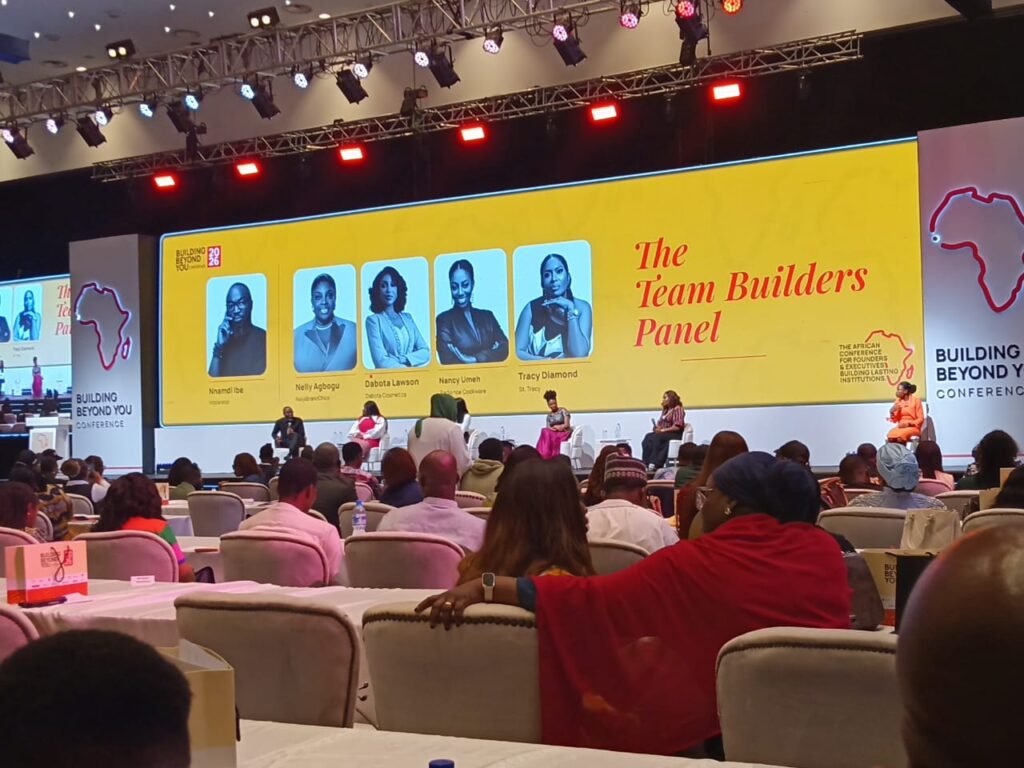
Tara Fela-Durotoye and the meaning of building beyond yourself
I am particularly grateful to our host and convener, Tara Fela-Durotoye, for creating that space.
There was something deeply significant about learning about legacy in a gathering convened by someone whose own journey reflects the very conversation we were having.
Tara started House of Tara from a living room at 20.
What began as an entrepreneurial dream has grown into an institution that has become a significant part of Nigeria’s beauty and business landscape.
And now, she is asking a much bigger question:
How do you build something that can stand beyond its founder?
Bringing together more than 1,200 founders, business owners and executives was itself a demonstration of what happens when people intentionally create platforms for knowledge, connection and continuity.
It was not simply another business gathering.
It was a reminder that entrepreneurship is not only about creating enterprises.
It is about creating institutions.
And institutions require a different kind of thinking.
The wisdom in the room
I am deeply grateful to the speakers who shared their experiences and perspectives.
To Fola Adeola, GTBank co-founder and Chairman of FATE Foundation; Ibukun Awosika; Fela Durotoye; Aminu M. Nyako, Managing Director of Sebore International Farms; Temilola Adepetun, Vice Chairman of SKLD Integrated Services; Olajide Martins Jr., Managing Director of Bemil Nigeria; Vivien Shobo, former CEO of Agusto & Co; Dr. Enahoro Okhae, CEO of GIGM; and Iroghama Ogbeifun, CEO of Stanzes Investments.
Thank you for the honesty, experience and practical lessons.
There is a different kind of education that happens when you sit in a room with people who have actually built through economic cycles, market changes, leadership transitions and organizational challenges.
You realise that many of the things we describe as “business problems” are actually structure problems.
And many of the things we call “growth challenges” are really people and systems challenges.
The Nigerian MSME question
This conversation is particularly important for Nigeria.
Our MSMEs are not simply small businesses.
They are employers.
They are innovation centres.
They are pathways to income.
They are where many young people get their first work experience.
They are where skills become livelihoods.
They are where families generate income.
They are an important part of the machinery of economic growth.
But we also have to be honest about the vulnerabilities within many small businesses.
A business may depend entirely on its founder.
Financial records may exist only in someone’s head.
Processes may not be documented.
Roles may be unclear.
Decision-making may be concentrated in one person.
There may be no succession plan.
There may be no middle management.
There may be no governance structure.
So when the founder becomes unavailable, the business struggles.
This is why building sustainable MSMEs requires more than access to capital.
Capital can help a business grow. Structure helps it survive.
From businesses to institutions
For me, this is where our work at Genius Hub becomes particularly relevant.
Human capital development is not just about teaching someone a skill and sending them into the marketplace.
It is also about helping people understand how to use those skills to create sustainable value.
If we want young entrepreneurs to build businesses that employ other people, then we have to teach them more than entrepreneurship theory.
We need to equip them with practical capabilities around leadership, financial management, systems, digital tools, people management, strategy and decision-making.
Because the goal should not simply be to create more businesses.
The goal should be to create businesses that can survive, grow and create opportunities for others.
There is a major difference.
A thriving business can employ five people today.
A well-structured institution can employ hundreds of people over decades.
That is the power of sustainability.
And that is why systems matter.
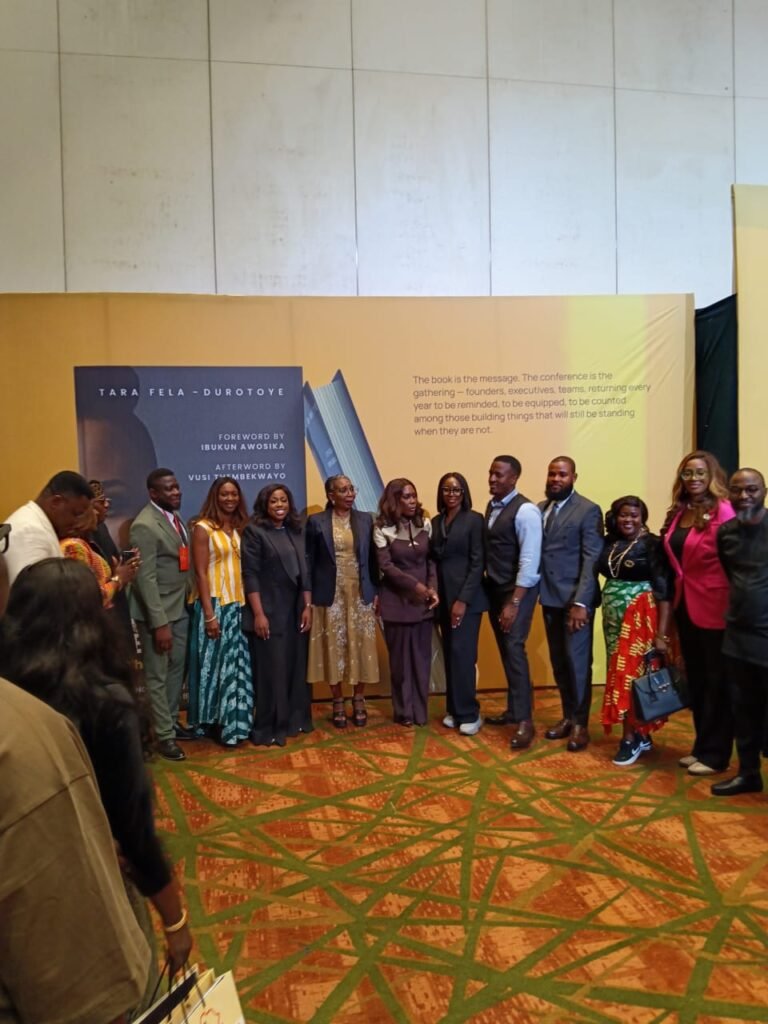
This is SDG 8 in action
For me, this conversation is also a practical expression of Sustainable Development Goal 8: Decent Work and Economic Growth.
We often talk about decent work as though it begins when someone gets a job.
But sustainable employment also depends on sustainable enterprises.
If businesses are constantly collapsing because they cannot survive beyond their founders, the jobs connected to those businesses disappear too.
If entrepreneurs do not build systems, their growth becomes limited.
If organisations do not develop people, leadership becomes a bottleneck.
If businesses do not plan for succession, years of accumulated knowledge can disappear with one individual.
So building stronger businesses is also part of building stronger economies.
When we help an entrepreneur create systems, we are not just helping one person.
We are potentially helping that business create jobs.
We are helping employees build careers.
We are helping families earn incomes.
We are contributing to a more resilient local economy.
And when those businesses become institutions that can survive leadership transitions, the impact multiplies across generations.
The most important asset may be the people you prepare
One of the things I kept thinking about after the gathering is that founders sometimes spend years building assets while neglecting to build successors.
We build offices.
We buy equipment.
We acquire customers.
We build brands.
We develop products.
But who are we building to carry the work forward?
The strongest organization is not necessarily the one with the most impressive founder.
It is the one with enough capable people to continue the mission when the founder is not in the room.
That requires intentional leadership development.
It requires mentorship.
It requires delegation.
It requires giving people room to lead.
And sometimes, it requires the humility to allow someone else to do things differently.
Because succession does not mean finding another version of yourself.
It means preparing someone who understands the mission well enough to carry it forward while having the capacity to evolve it for a different time.
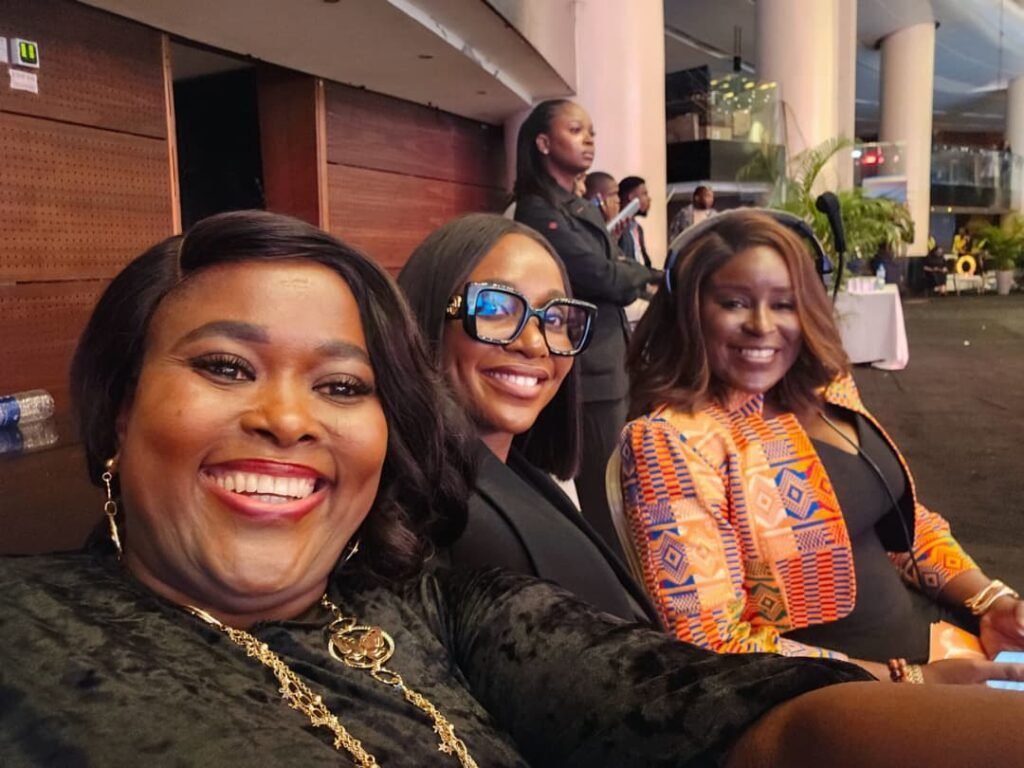
Build beyond you
The older I become in my own entrepreneurial journey, the more I understand that success cannot only be measured by how far you personally go.
At some point, the question changes.
It becomes:
What happens after you?
Who benefits from what you built?
Who continues the work?
Who gets opportunities because of the systems you created?
Who becomes a leader because you invested in them?
What happens to your organization when you are not available to make every decision?
Can the vision survive the founder?
Can the values survive the founder?
Can the institution survive the founder?
Those are the questions that separate a successful business from a lasting institution.
And perhaps that is the real meaning of legacy.
Legacy is not about making yourself impossible to replace.
It is about building something strong enough to continue without you.
I left that room reminded that entrepreneurship is not just about starting.
It is about building.
And building is not just about growth.
It is about structure.
It is about governance.
It is about people.
It is about continuity.
It is about preparing for tomorrow while you are still building today.
So, to every entrepreneur reading this, I would leave you with one question:
If you stepped away from your business tomorrow, what would continue without you?
If the answer is “not much,” then perhaps the next stage of your growth is not expansion.
Perhaps it is structure.
Document the processes.
Develop your people.
Strengthen your governance.
Create accountability.
Build leadership.
Think about succession.
Because the greatest evidence that you built something meaningful is not that everything stops when you leave.
It is that the work continues.
Build systems, not just success.
Build people, not just businesses.
Build institutions, not just brands.
Build so it thrives beyond you.
Isimeme Whyte
