

A girl should not have to choose between her childhood and her future.
She should not have to abandon her education because someone has decided she is old enough to become a wife. She should not have to exchange her dreams for responsibilities she is not emotionally, physically or financially prepared to carry. And she should never have to depend on the decisions of others to determine how far her life can go.
Yet, for many girls, these are not distant possibilities. They are realities that continue to shape their lives, limit their choices and determine their futures.
On October 11, 2026, the world observed the International Day of the Girl Child under the United Nations theme, “End child marriage and invest in girls’ rights!”
For me, this is more than an annual observance. It is a call to examine the conditions in which girls are growing up, the opportunities available to them and the decisions being made about their futures.
It is also a reminder that protecting girls requires more than telling them they can become anything they want to be. We must create environments where they have the rights, education, support and opportunities to make those possibilities real.
As someone whose work spans human capital development, skills acquisition, youth and women empowerment, and social impact, I believe this conversation deserves our sustained attention.
Because when we talk about the future of our communities, we cannot afford to leave girls out of the conversation.
Child Marriage Is More Than an Early Wedding
One of the challenges in discussing child marriage is that the conversation can sometimes become too focused on the marriage itself, rather than the childhood, choices and opportunities that may be taken away.
Child marriage is a violation of children’s rights. It can interrupt education, restrict personal freedom, expose girls to serious health and safety risks, and limit their ability to determine the direction of their lives.
Behind every statistic is a girl with a name, a personality, a talent and a future that deserves the opportunity to unfold.
She may want to become a doctor, an entrepreneur, an engineer, a filmmaker, a teacher or a technology professional. She may have a natural gift for business, design, leadership or creative expression. She may still be discovering what she loves and what she wants to become.
That is what childhood should allow her to do: learn, explore, develop and grow.
When a girl is pushed into marriage before she is ready, those opportunities can be severely restricted. Her education may end prematurely. Her financial independence may become more difficult to achieve. Her ability to make decisions about her own life may be diminished.
We must therefore stop treating child marriage as a private family matter that society has no business questioning.
Protecting children is a collective responsibility.
Families, communities, schools, traditional institutions, religious leaders, governments and civil society organisations all have a role to play in ensuring that girls are protected and their rights respected.
Tradition cannot be an excuse for denying a child the opportunity to grow into the person she has the potential to become.
Poverty Should Never Determine a Girl’s Future
We must also be honest about the circumstances that make some girls particularly vulnerable.
In many communities, economic hardship, insecurity, limited access to education, harmful social norms and gender inequality can contribute to decisions that place girls at risk.
For families facing difficult choices, child marriage may sometimes be viewed as a way to reduce financial pressure or secure a girl’s future. But a decision made under economic pressure can have consequences that extend far beyond the immediate circumstances.
This is why ending child marriage requires more than condemnation. It requires practical alternatives.
Families need support. Girls need access to quality education. Communities need awareness and protection systems. Vulnerable households need pathways to economic stability.
We must create conditions in which keeping a girl in school is possible, where her education is valued, and where her family does not feel compelled to sacrifice her childhood because of financial hardship.
This is also where economic empowerment becomes important.
When women have access to skills, decent work and sustainable livelihoods, they can strengthen their households and expand the choices available to their children. When communities have stronger economic opportunities, families can become better positioned to make decisions that protect children’s rights.
Economic empowerment alone will not end child marriage, but it can be an important part of a broader response that includes education, protection, legal enforcement and changing harmful social norms.
Investing in Girls Means More Than Enrolling Them in School
Education is one of the most powerful investments we can make in a girl’s future.
But investment must go beyond getting a girl into a classroom.
We must ask whether she can remain in school, learn in a safe environment, access the resources she needs and complete her education without being forced to abandon it.
We must also ask whether she is being prepared to participate meaningfully in the world she is growing into.
The world is changing rapidly. Technology is transforming industries, digital platforms are creating new opportunities, and the future of work demands a combination of technical competence, critical thinking, creativity and adaptability.
Girls deserve access to these opportunities.
They deserve to learn about technology, entrepreneurship, financial literacy, leadership and digital skills. They deserve opportunities to discover their abilities and develop the confidence to use them.
They should not be told that certain careers, industries or ambitions are beyond their reach simply because they are girls.
At Genius Hub Group, our work in skills development, digital inclusion, TVET, entrepreneurship and human capital development reinforces my belief that people need practical opportunities to turn their potential into meaningful outcomes.
That principle must apply to girls from every background.
A girl who learns a digital skill should be able to explore how that skill can become a career. A girl who discovers an entrepreneurial interest should have opportunities to develop it. A girl who dreams of leading should be encouraged to build the competence and confidence to do so.
Investing in girls means preparing them not only to survive, but to make choices, build livelihoods and shape their own futures.
Why Skills and Economic Independence Matter
One of the things I strongly believe is that empowerment must lead to practical possibilities.
It is not enough to tell girls to be confident if we do not provide environments where their confidence can grow. It is not enough to encourage ambition if we do not expand their access to education, skills and opportunity.
And it is not enough to celebrate women who have succeeded if we do not also examine the barriers that prevent other girls from getting started.
Skills development can be part of the solution.
When girls have access to relevant education and practical skills, they can begin to see more possibilities for their future. They can develop the capacity to participate in the economy, pursue meaningful careers, build businesses and make informed decisions.
Financial literacy can help them understand money and economic choices. Digital skills can expand their access to learning and work. Entrepreneurship education can help them identify opportunities and understand how businesses operate. Life skills can strengthen communication, critical thinking, confidence and decision-making.
These capabilities do not replace the need for child protection, education or the enforcement of laws against child marriage. Rather, they complement those efforts by helping girls develop the tools to exercise their rights and participate more fully in society.
The goal is not simply to raise girls who can earn money.
It is to raise girls who understand their worth, know their rights, can recognise harmful situations, have access to trusted support and can make informed decisions about their lives.
That is a more complete understanding of empowerment.
The Role of Parents and Communities
We cannot have a meaningful conversation about girls’ rights without discussing the people and institutions closest to them.
Parents and caregivers have an important responsibility to protect girls, listen to them and support their development. Communities must challenge harmful beliefs that limit girls’ choices or treat early marriage as an acceptable response to economic or social pressure.
Schools must provide safe learning environments and help children understand their rights. Traditional and religious leaders can use their influence to promote practices that protect children. Governments must strengthen child protection systems, enforce relevant laws and ensure that girls can access education and essential services.
We also need to listen to girls themselves.
Too often, conversations about their futures happen without them. Adults make decisions, communities establish expectations, and institutions design programmes without giving girls sufficient space to express their needs and aspirations.
If we are serious about investing in girls’ rights, their voices must be part of the process.
We need to understand the challenges they face, the support they need and the futures they want to build.
Protecting girls should not mean removing their voices from decisions. It should mean creating safe, age-appropriate opportunities for them to be heard, respected and supported.
Beyond Awareness: The Work Must Continue
Every year, international observances give us an opportunity to bring important issues into public conversation.
But awareness is only the beginning.
What happens after October 11?
What changes in our homes, schools and communities?
What resources are committed to protecting girls?
What practical support becomes available to vulnerable families?
How many girls gain access to education, skills, mentorship and opportunities they previously lacked?
How effectively do our institutions respond when a child is at risk?
These are the questions that turn advocacy into action.
Through our work at Genius Hub and Genius Hub Global Initiative, we understand the importance of connecting social impact with practical support, economic empowerment and opportunities for people to rebuild or improve their lives.
Protecting vulnerable people requires us to look beyond the immediate problem and examine the conditions that allow vulnerability to persist.
For girls at risk of child marriage, that means working towards stronger protection systems, sustained access to education, community awareness, economic support for vulnerable households and opportunities that allow girls to grow and develop.
It also means collaboration. No single organisation can solve this challenge alone. Government institutions, schools, civil society organisations, development partners, businesses, families and community leaders must work together.
This is where the spirit of Sustainable Development Goal 17, Partnerships for the Goals, becomes particularly relevant.
Lasting change requires shared responsibility and coordinated action.
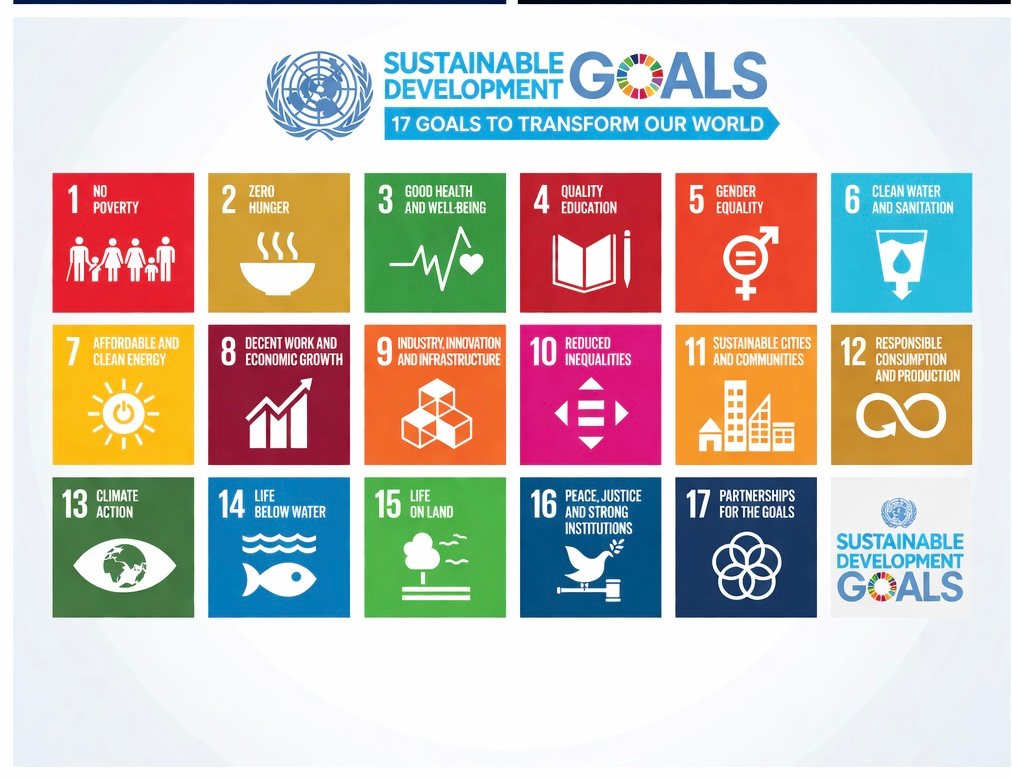
The Sustainable Development Goals and the Future of Every Girl
Ending child marriage and investing in girls’ rights are closely connected to several of the United Nations Sustainable Development Goals.
SDG 5: Gender Equality calls for the elimination of harmful practices, including child, early and forced marriage. It reinforces the need to protect girls’ rights and address the social norms that sustain inequality.
SDG 4: Quality Education reminds us that every girl deserves access to inclusive, equitable and quality education and lifelong learning opportunities.
SDG 8: Decent Work and Economic Growth highlights the importance of building pathways to productive employment and sustainable livelihoods as girls grow into adulthood.
SDG 10: Reduced Inequalities calls attention to the barriers that prevent vulnerable children and communities from accessing opportunities and essential services.
These goals are interconnected. We cannot achieve meaningful gender equality while girls continue to be denied education and autonomy. We cannot build an inclusive economy while a significant number of girls are prevented from developing their abilities. And we cannot create sustainable communities without protecting the rights, dignity and potential of children.
Investing in girls is therefore not a favor to them. It is an investment in the future of our society.
A Girl’s Future Should Not Be Decided Too Soon
As we reflect on the International Day of the Girl Child 2026, I keep returning to one fundamental truth: a girl’s future should not be decided for her before she has had the opportunity to discover it.
She deserves time to grow.
She deserves access to education.
She deserves protection from harmful practices.
She deserves to develop her talents.
She deserves to ask questions, explore possibilities and make age-appropriate choices about her future.
She deserves to know that her value is not determined by how early she marries, how much she can provide for others or how well she conforms to expectations that limit her potential.
Most importantly, she deserves a society that does more than celebrate her on one day of the year.
A society that protects her rights throughout the year.
A society that invests in her education and development.
A society that challenges harmful norms rather than defending them.
A society that creates opportunities for her to participate, lead and thrive.
The responsibility belongs to all of us.
Let us move beyond statements and celebrations to the practical work of protecting girls, supporting families, strengthening communities and building pathways to opportunity.
Let us make it possible for every girl to grow up with dignity, develop her abilities and imagine a future that is not limited by the circumstances into which she was born.
Because when we protect a girl, we protect her right to choose her future.
When we educate a girl, we expand her possibilities.
When we equip a girl with relevant skills, we strengthen her capacity to participate in society.
And when we invest in girls’ rights, we contribute to a future in which more people can live with dignity, opportunity and hope.
End child marriage. Protect girls’ rights. Invest in their futures.
Not just on October 11, but every day.
Isimeme Whyte
