
Some of the most meaningful impact begins with a conversation.
Sometimes, transformation begins with a programme.
Sometimes, it begins with an idea.
And sometimes, it begins with two people sitting across a table and asking a very simple question:
What can we achieve together that would be difficult to achieve alone?
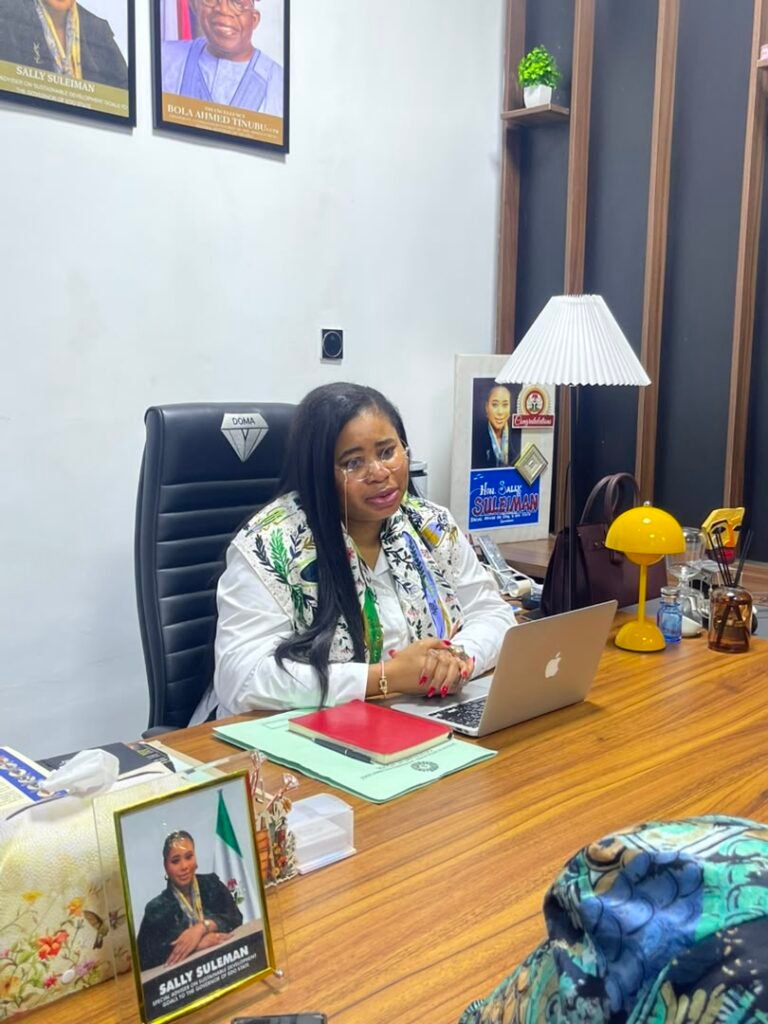
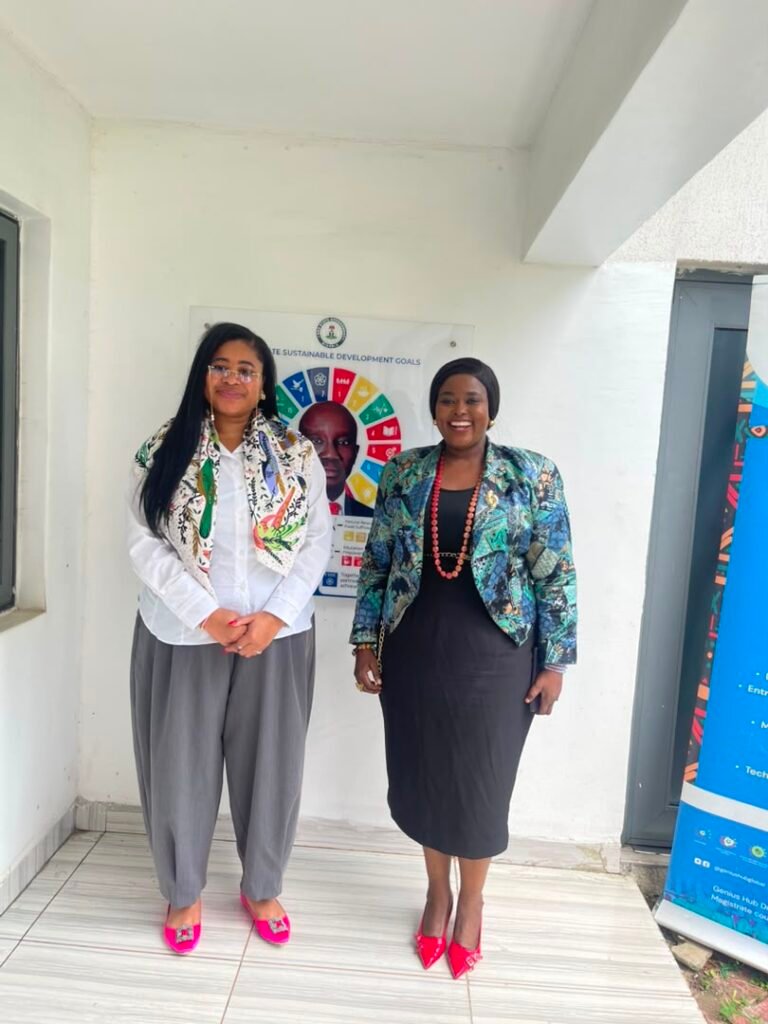
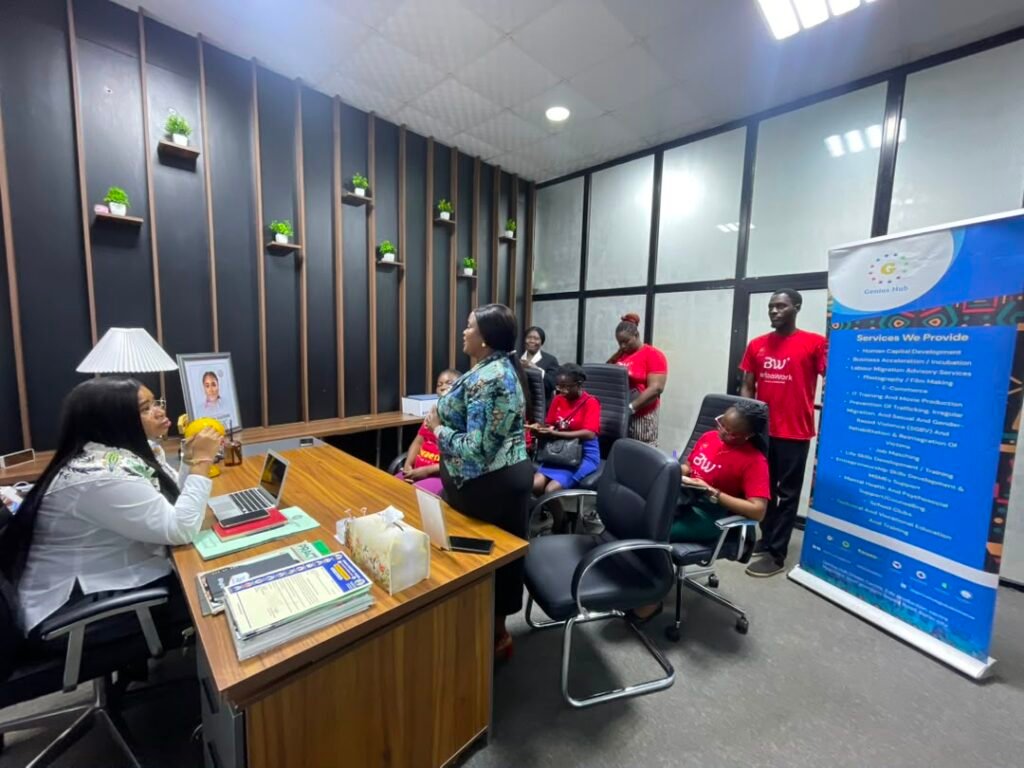
That was the spirit behind a courtesy visit my team and I had the privilege of paying to the office of the Special Adviser on Sustainable Development Goals to the Edo State Governor, Hon. Sally Suleiman.
The visit was an opportunity to explore areas of collaboration between the Office of the Special Adviser on SDGs and Genius Hub Limited, but for me, it represented something much bigger.
It was an opportunity to connect the work we are already doing in skills development, creative education, entrepreneurship, business acceleration, digital transformation, and youth empowerment with the broader sustainable development priorities of Edo State.
Because sustainable development is not something that happens in isolation.
It is built through people.
Through institutions.
Through ideas.
Through resources.
And, most importantly, through partnerships.
Why the Sustainable Development Goals Matter
The Sustainable Development Goals are often discussed at the global level.
We hear about poverty eradication.
Quality education.
Gender equality.
Decent work.
Innovation.
Strong institutions.
Partnerships.
But the real value of the SDGs is found when these global goals are translated into action within communities.
What does quality education look like for a young person in Edo State?
What does decent work look like for a graduate trying to enter the labour market?
What does economic empowerment look like for a woman trying to build a business?
What does innovation look like for an entrepreneur developing a solution to a local problem?
What does inclusion look like for someone who has never had access to digital skills?
These are the questions that make sustainable development real.
And they are questions that require organizations to work together.
Skills Are a Pathway to Opportunity
At Genius Hub Limited, one of our strongest convictions is that skills are a pathway to opportunity.
We have seen what happens when people acquire relevant and practical skills.
Confidence grows.
Employability improves.
Entrepreneurial possibilities expand.
People begin to see options that did not previously exist.
A young person who learns a digital skill can access opportunities beyond their immediate geographical location.
A fashion entrepreneur who understands modern production techniques can improve the quality and efficiency of their business.
A creative professional who develops the right technical and business skills can turn their talent into a sustainable career.
An aspiring entrepreneur who receives the right support can move from an idea to a viable business.
This is why skills development cannot be separated from sustainable development.
When we equip people to become economically productive, we are not simply improving individual lives.
We are strengthening families, businesses, communities, and the wider economy.
From Training to Economic Empowerment
There is an important difference between teaching a skill and creating an opportunity.
Training is the beginning.
The ultimate goal should be application.
Can the person use the skill to secure employment?
Can they start a business?
Can they serve clients?
Can they generate income?
Can they employ someone else?
Can they contribute to their community?
These are the outcomes that make skills development meaningful.
At Genius Hub Limited, our work therefore extends beyond simply teaching people what to do.
We focus on creating an ecosystem where people can develop practical capabilities, understand the world of work, explore entrepreneurship, and connect their skills to opportunities.
That approach is particularly important in a rapidly changing economy where traditional career pathways are being transformed by technology, entrepreneurship, remote work, artificial intelligence, and the growth of the digital economy.
The Importance of Youth Empowerment
Any serious conversation about the future of Edo State must include young people.
Young people represent an enormous source of creativity, energy, innovation, and entrepreneurial potential.
But potential alone is not enough.
Potential needs investment.
It needs mentorship.
It needs access to skills.
It needs networks.
It needs opportunities.
And it needs institutions willing to create pathways through which young people can translate their abilities into meaningful economic participation.
This is why youth empowerment remains central to our work.
We want young people to move beyond being beneficiaries of development programmes and become active contributors to the development of their communities.
A young person who develops a valuable skill can become an employee.
They can become a freelancer.
They can become an entrepreneur.
They can become an employer.
They can become a trainer.
They can become an innovator.
The ripple effect of one empowered individual can therefore extend much further than we initially imagine.
What Partnership Really Means
This brings me to SDG 17: Partnerships for the Goals.
Partnership is sometimes reduced to signing agreements, taking photographs, or announcing collaborations.
But meaningful partnership requires much more.
It requires trust.
It requires alignment.
It requires openness.
It requires sharing knowledge and expertise.
It requires combining resources.
It requires listening to one another.
And it requires a willingness to measure success by the impact created rather than by who receives the credit.
For government, partnerships can bring access to expertise, innovation, networks, and implementation capacity.
For private organizations, government partnerships can provide opportunities to scale proven solutions and reach communities more effectively.
For development organizations, partnerships create stronger ecosystems for achieving sustainable outcomes.
And for citizens, meaningful partnerships can translate into better services, more opportunities, stronger institutions, and improved livelihoods.
That is the kind of partnership we should be pursuing.
Why Government and the Private Sector Must Work Together
Government has an indispensable role in sustainable development.
It provides policy direction.
It creates regulatory frameworks.
It develops public infrastructure.
It coordinates public resources.
And it has the responsibility to ensure that development reaches citizens equitably.
But government does not have to do everything alone.
The private sector possesses expertise, innovation, technology, networks, and implementation capacity that can complement public-sector efforts.
Organizations like Genius Hub can contribute practical experience in areas such as skills development, entrepreneurship, digital transformation, creative education, and workforce development.
When these capabilities are brought together intentionally, we can move faster and reach further.
The objective is not to replace one institution with another.
It is to create an ecosystem where each institution contributes what it does best.
The Conversation We Had
Our conversation with Hon. Sally Suleiman was therefore not simply about introducing Genius Hub Limited or discussing what we do.
It was about identifying where our missions intersect.
We explored how our work in skills development and creative education could align with Edo State’s sustainable development priorities.
We discussed youth empowerment.
We discussed entrepreneurship.
We discussed economic opportunity.
We discussed the importance of creating practical pathways through which young people can develop skills and use those skills to build sustainable livelihoods.
And we considered how stronger collaboration could expand the reach and impact of these efforts.
These conversations are important because sustainable development requires alignment.
There may already be organizations doing excellent work.
There may already be programmes addressing important challenges.
But when these efforts are connected, their impact can become significantly greater.
Creating Opportunities Across Sectors
The future of skills development cannot be confined to one sector.
A young person may need digital skills today and entrepreneurship support tomorrow.
A creative professional may need technical training alongside business development.
An entrepreneur may need access to networks, markets, mentorship, and finance.
A graduate may need practical workplace experience before securing sustainable employment.
This means our development ecosystem must be flexible enough to respond to different stages of people’s journeys.
At Genius Hub Limited, we are interested in building those pathways.
Our work across TVET, digital skills, creative education, entrepreneurship, business acceleration, and employability reflects our belief that people need more than isolated interventions.
They need ecosystems.
Sustainable Development Must Be Measured in Lives
Ultimately, the success of sustainable development should not only be measured by the number of programmes launched or meetings held.
It should be visible in people’s lives.
A young person who acquires a skill and secures employment.
A woman who develops the confidence and capacity to grow her business.
An entrepreneur who creates jobs.
A young professional who gains access to an opportunity that changes the trajectory of their career.
A community that becomes more economically resilient.
These are the outcomes that matter.
These are the moments where development becomes tangible.
Looking Ahead
Our courtesy visit to the Office of the Special Adviser on Sustainable Development Goals was an important first step in exploring what could be achieved through collaboration.
But as I have learned repeatedly through my work, a good conversation is only the beginning.
The real work happens afterward.
It happens when ideas become plans.
When plans become programmes.
When programmes reach people.
And when those programmes create measurable, lasting impact.
We look forward to exploring practical areas where Genius Hub Limited and the Office of the Special Adviser on SDGs can work together to expand skills, create opportunities, empower young people, and advance sustainable development across Edo State.
I am particularly grateful to Hon. Sally Suleiman for the warm reception, thoughtful conversation, encouragement, and prayers.
Thank you for creating space for this conversation.
Thank you for being open to collaboration.
And thank you for the opportunity to explore how we can contribute to a shared vision for a more skilled, empowered, and sustainable Edo State.
More Conversations. More Partnerships. More Impact.
I left the meeting reminded of something I believe deeply:
No single organization has all the answers.
But when the right people come together with a shared purpose, we can find better answers.
That is the power of partnership.
It allows us to combine strengths.
It allows ideas to travel.
It allows resources to go further.
And it allows impact to reach people who might otherwise never have been reached.
At Genius Hub Limited, we will continue to seek out those conversations.
We will continue to build relationships with institutions that share our commitment to human capital development.
And we will continue looking for practical ways to turn skills into opportunities and opportunities into sustainable livelihoods.
Because sustainable development is ultimately about creating a future where people have the knowledge, skills, opportunities, and support they need to thrive.
And sometimes, that future begins with nothing more than a conversation.
More conversations.
More partnerships.
More impact.
-Isimeme Whyte
